
- News
- World News
- Middle East News
- With mom-led video training sessions & tips by internet gurus, desi restaurants hit by import curbs in Dubai turn ‘atmanirbhar’
Trending
This story is from July 14, 2020
With mom-led video training sessions & tips by internet gurus, desi restaurants hit by import curbs in Dubai turn ‘atmanirbhar’
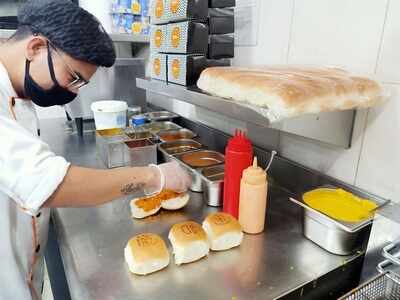

As India went into a lockdown, desi restaurateurs whose businesses have been hit by travel curbs are looking for ways to become self-reliant.
So Dhote got his mother and aunt — who used to ground the spices and prepare them into special mixes before sending them to Dubai with a family member— to train his staff over video calls.
“We use homemade recipes passed down from generations to prepare our dishes. Each one — be it vada pao or chutney — uses a special mix of spices which my family makes and sends over. After Covid-19-induced restrictions, we were not able to get the spices on time. Getting the same ingredients here was easy, but turning them into the mixes our customers were accustomed to proved harder. So my staff started online classes hosted by my mother and aunt to learn how to create the same taste,” said the 34-year-old.
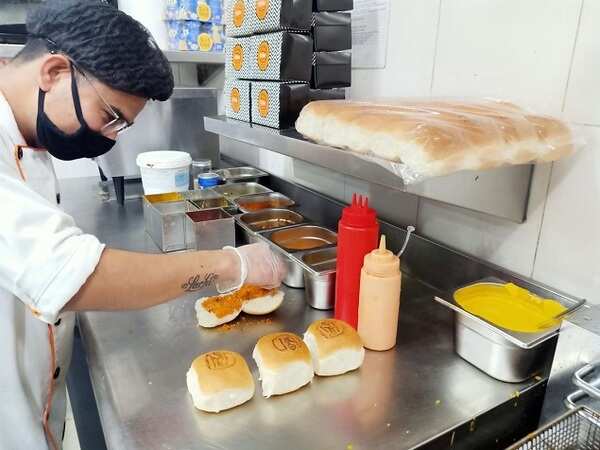
Dhote now plans to continue making the spices in Dubai, at least for the near future. Like Dhote, other desi restaurateurs whose businesses have been hit by transportation curbs, too, are looking for ways to become self-reliant.
At ‘Project Chaiwala’, chai sourced from Darjeeling is no more served in traditional kulhads. The reason? The kulhads imported from Chennai were one of the commodities hit when import routes were affected due to Covid-19. “We had enough supply of tea to last us during the lockdown phase in India, but we were unable to get kulhads that we imported from a social enterprise in Chennai due to freight restrictions,” said Justin
Joseph, co-founder of Project Chaiwala.
The team is now experimenting with various sustainable materials that can be used to serve tea. “We would like to continue importing kulhads from the social enterprise since it employs underprivileged women but we are also looking at ways to reduce dependence on external suppliers, should a situation like this arise again,” said Joseph.
Another Indian restaurateur, Anmol Mehta, who runs an Italian eatery had to set up an entire kitchen in Dubai to make bread and sauces and learned ways to make cheese from skimmed milk online. Mehta, who is the managing director of ‘Little Italy Restaurant’ founded by his family, imported cheese, sauces and breads from his central kitchen in Pune, where they have another branch.
According to Mehta, having the main kitchen in India was a cheaper alternative and it also gave them easy access to high-fat milk — essential to make cheese — which was harder to find in Dubai. “But our products have a short shelf life and even a week’s delay can cause spoilage. As shipments were delayed due to Covid-19, we had to come up with an arrangement to make cheese and sauces here.”
But preparing cheese proved difficult. “The fat and protein content is relatively lower in milk here. You mostly find skimmed milk in bottles.” So Mehta turned to social media and internet gurus for advice and guidance.
“I conducted extensive online research and went on a number of social media platforms to find a way out. Finally, I was able to come up with a basic home-science technique to make the kind of cheese we needed. This period was a lesson in self reliance for me.”
End of Article
FOLLOW US ON SOCIAL MEDIA










Photostories

Hot Picks
TOP TRENDING
Popular Categories
Hot on the Web
Top Trends
Caleb WilliamsBilkis Bano CaseAnne AllanVince McMahon Netflix DocuseriesIPL Player RetentionHigh Paying Freelance JobsSean CombsIsrael Hezbollah WarNEET UG Paper Leak CaseKerala Lottery ResultsTamil Nadu NEET UG CounsellingTirupati LadduWest Bengal Teacher RecruitmentSoudi Al Nadak IslandParam Rudra SupercomputersKerala Bans Study NotesLive Cricket Score
Trending Topics
Living and entertainment
Latest News
“Goodbye Meta AI”: How over 600,000 people, including celebrities, fell for a fake message on Facebook, InstagramHC raps CCP for evicting 2 from fish mkt buildingFirst person died in UK from ‘liquid’ Brazilian butt lift: All you need to know about liquid BBL and risks it posesRhea Ripley’s husband comments on how much time she has left in the ringNayanthara and Vignesh Shivan share emotional notes on their twins Ulag and Uyir's second birthdayIsraeli strikes kill 600, displace 90,000 as Lebanese civilians flee in DesperationNavya Naveli Nanda reacts to Kolkata rape-murder case, calls for accountability and safer spaces for womenSearching for synthetic opioid rescue agents: Identification of atoxifent as a potent opioid agonist with reduced respiratory depressionKrithi Shetty shares a sneak peek of her birthday celebration - SEE PICS8 Spices that can help reduce high blood sugarValpoi torrential rainfall sets record, crosses 200 inchesThere’s plastic in your chai-samosa, and India is No. 1 culpritKerala lottery results: Karunya Plus KN-540 winners for 26 September 2024; first prize Rs. 80 lakhs, second prize Rs 10 lakh and third prize Rs. 1 lakh'I'm not upset with Kangana but ... ': Chirag Paswan as Mandi MP apologises for farm law remarkThe most important lesson investors can learn from trekkersCandidates Protest Outside JSSC Office, Accuse Malpractice in Recruitment ExamGmail app on Android and iOS is getting Google’s blue verification checkmarks: Here's how it'll affect usersTop 5 WWE’s tallest wrestlers from Giant Gonzalez to The Great Khali
Copyright © 2024 Bennett, Coleman & Co. Ltd. All rights reserved. For reprint rights: Times Syndication Service